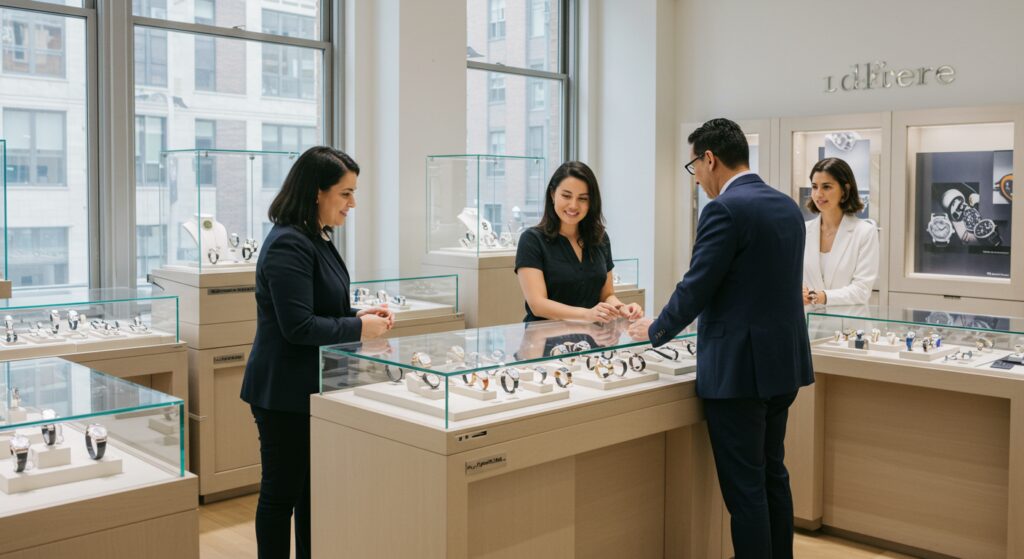
There’s a moment that happens in almost every transaction with experienced watch buyers NYC has to offer — a pause, a closer look under the loupe, and then a number that either surprises you or doesn’t. After two decades in this business, the veterans who work the Diamond District and surrounding blocks have seen every kind of seller walk through the door. The nervous first-timer clutching a Rolex inherited from a grandfather. The savvy collector offloading a duplicate. The person who just needs cash and has no idea what’s sitting on their wrist. Each of them leaves with a different outcome, and the difference almost always comes down to preparation.
The Watch in Your Drawer Is Probably Worth More Than You Think
Most people dramatically underestimate what a pre-owned timepiece can fetch on today’s market. The secondary watch market has been running hot for years, and certain references — particularly from Rolex, Patek Philippe, Audemars Piguet, and even some Omega models — have held value in ways that would make a stock trader jealous.
What surprises sellers most is that condition isn’t always the deciding factor. A watch with honest wear and original parts will often outperform a heavily polished piece that’s been “restored” without care. Polishing removes metal. It rounds off edges. It erases the character that collectors actually pay for. A buyer who knows what they’re doing will spot a re-polished case immediately, and they’ll adjust their offer accordingly.
The box and papers situation is real, but it’s not a dealbreaker. Yes, having original documentation, hang tags, and the manufacturer’s box adds value — sometimes significantly. But a clean, unpolished watch with a verified reference number can still command a strong price even without the full set. Don’t let the absence of paperwork convince you to lowball yourself before you even walk in the door.
Why the First Offer You Get Is Rarely the Best One
This is the piece of advice that most sellers wish someone had told them earlier. The first offer you receive — whether it’s from a pawn shop, an online platform, or even a reputable dealer — is almost never the ceiling. It’s a starting point. Experienced sellers treat it that way.
New York operates differently from other markets. The density of serious buyers, the volume of transactions, and the direct access to international collectors and auction houses means that competition among buyers here is real. That competition works in your favor if you use it. Get two or three offers before you commit to anything. You’re not obligated to sell on the spot, and any buyer worth their reputation won’t pressure you to.
There’s a useful breakdown of what actually drives value in a timepiece over at this piece on unlocking value in your timepieces — it’s worth reading before you sit down across from anyone with a loupe. Understanding the language buyers use puts you in a much stronger position during the conversation.
The Details That Quietly Kill Your Offer
Beyond condition and documentation, there are a handful of smaller factors that experienced dealers notice immediately — and that most sellers never think about.
Service history matters. A watch that has been regularly serviced by an authorized dealer, with records to prove it, signals to a buyer that the movement is in good shape. A watch that hasn’t been touched in fifteen years is a question mark, and buyers price in uncertainty.
The bracelet is part of the package. Stretched links, missing pins, or a replaced bracelet can shave real money off an offer. If your watch came with a specific bracelet or strap configuration, keep it. Even if you’ve been wearing it on a NATO strap for years, dig out the original before you go to sell.
Aftermarket modifications are a red flag. Diamond-set bezels added by a third party, non-original dials, or swapped hands might look impressive, but they typically reduce value rather than increase it. Collectors want originality. Modifications, even expensive ones, narrow your buyer pool considerably.
One thing that comes up consistently from people who’ve gone through the selling process is the relief of working with buyers who explain their reasoning. When a dealer walks you through exactly why a particular reference is priced the way it is, the whole experience feels less like a negotiation and more like a conversation. That transparency is something the team at NYC Watch Buyers, based right in Manhattan, has built their reputation on over years of working with both first-time sellers and serious collectors.
Timing Your Sale Without Overthinking It
People spend a lot of energy trying to time the market perfectly. The reality is that the watch market, like any market, is difficult to predict with precision. What you can control is your own preparation.
If you have a watch you’re considering selling, the smartest move is to get informed now rather than waiting for some ideal moment that may or may not arrive. Research recent sold listings for your specific reference on platforms like Chrono24 or WatchCharts. Know the model number, production year, and any notable variants. Walk into a conversation with a buyer already knowing the range your piece has been selling in — not to be combative, but to be credible.
The sellers who consistently walk away satisfied are the ones who did their homework. They weren’t necessarily the ones with the rarest watches or the most complete sets. They were simply prepared, patient, and willing to ask questions. In a city with as many options as New York, that combination goes a long way.
Frequently Asked Questions About Watch Buyers
How do I know if a watch buyer in NYC is offering me a fair price?
The best way to ensure you’re getting a fair offer is to get quotes from multiple watch buyers across NYC before committing to a sale. Reputable buyers will typically reference current market values, recent auction results, and the specific condition of your watch to justify their offer, so don’t hesitate to ask them to walk you through their pricing process. You can also check platforms like Chrono24 or WatchBox beforehand to get a general sense of what your watch is selling for on the open market.
Do I need to have the original box and papers to sell my watch to a buyer in NYC?
While having the original box, papers, and service records will almost always increase the value of your watch, most NYC watch buyers will still purchase timepieces without them. However, you should expect a lower offer if documentation is missing, as it makes authentication and resale more challenging for the buyer. Brands like Rolex, Patek Philippe, and Audemars Piguet see the most significant price differences between watches sold with and without full sets.
Where in NYC are the most reputable places to sell a luxury watch?
The Diamond District on West 47th Street in Midtown Manhattan is one of the most well-known areas in NYC where you can find experienced watch buyers who deal in luxury and vintage timepieces. Additionally, established jewelry stores and dedicated watch dealers in neighborhoods like the Upper East Side and SoHo often have strong reputations and offer competitive pricing. Always look for buyers who are members of professional trade organizations like the American Gem Society or have verifiable customer reviews on Google and Yelp.
How long does the watch selling process typically take at a NYC watch buyer?
In most cases, a walk-in appraisal and same-day sale at a NYC watch buyer can be completed within 30 minutes to an hour, depending on the complexity of the timepiece and the buyer’s authentication process. If the buyer needs to send the watch out for additional verification or if you’re negotiating a higher-value piece, the process could take a few days. Payment is typically issued immediately upon agreement, either in cash or via bank wire transfer for higher-value transactions.
What watch brands are NYC watch buyers most interested in purchasing?
NYC watch buyers are generally most eager to purchase watches from high-demand luxury brands such as Rolex, Patek Philippe, Audemars Piguet, Richard Mille, and Cartier, as these hold strong resale value in both local and global markets. Vintage watches from brands like Omega, Longines, and Heuer also attract significant interest, particularly among collectors who frequent NYC’s active vintage watch community. Even lesser-known Swiss or German brands may fetch competitive offers if they are in excellent condition or represent a sought-after complication like a tourbillon or perpetual calendar.